If condos in the Bradenton area are getting cheaper, why are more of them selling?
That's the question a lot of buyers are quietly asking themselves this fall, and the portals aren't built to answer it. Manatee County's condo and townhome market closed 336 sales in March 2026, up 12 percent from a year earlier, while the median price for those same closings fell 11.3 percent to $300,000. Two months later, May closings came in at 288, still up 8.7 percent year over year, with the median down another 5.1 percent to $297,000. Sales under $200,000 nearly doubled over that same stretch, up 93.9 percent.
A falling median with rising volume usually means one of two things: either the whole market is genuinely getting cheaper, or the mix of what's selling has changed. In Bradenton right now, it's the second one. A wave of Florida condo law changes aimed at post-Surfside structural safety is quietly sorting buildings into two groups, and the median price is just the visible residue of that sort. Buyers who understand which group a specific building falls into are negotiating from a position of real leverage. Buyers who don't are the ones discovering the difference at the closing table.
The split hiding inside the median
The mechanism behind this isn't demand. It's compliance.
Since 2022, Florida has required condo and cooperative buildings three or more habitable stories tall to complete a milestone structural inspection and a Structural Integrity Reserve Study, known as a SIRS, that covers items like the roof, load-bearing structure, plumbing, electrical systems, waterproofing, and windows and doors. For years, associations could vote to waive or underfund the reserves tied to those items. That option is gone. LegalClarity says any association budget adopted on or after December 31, 2024 can no longer waive or reduce reserve funding for the structural components a SIRS identifies; The HOA Guide describes the same reserve-funding restriction. Boards that spent a decade keeping monthly dues artificially low by skipping those contributions are now required to fund them in full, and the first budgets built under that requirement are the ones residents are living with in 2026.
That's why this is landing now rather than when the law first passed. A building that completed its milestone inspection with no findings, funded its SIRS reserves on schedule, and kept its board minutes and financials current is a straightforward sale. Its dues may be higher than they were three years ago, but the higher number is the honest cost of owning the building, not a warning sign. A building that deferred its inspection, discovered deferred maintenance late, or is still short on reserve funding is a different transaction entirely. Its owners are often motivated to sell before a special assessment lands, its financing options are narrower, and its asking price reflects that risk. Blend enough of both kinds of sales into one countywide median, and you get exactly what Manatee County is showing right now: more transactions, at a lower median price, without the underlying market actually softening.
April 2026 shows the same mechanism working in the opposite direction, which is the real tell. Manatee's condo and townhome closings that month rose 12.5 percent year over year to 307, but the median price climbed 6.6 percent to $320,000, not down. Same law, same county, one month apart from the May numbers above, and the median moved the other way because April's closings skewed toward buildings with clean compliance records rather than the discounted, assessment-risk inventory that dominated May's entry-level surge. A single month's median isn't a verdict on Bradenton condos. It's a readout of which pile of inventory happened to close that month, and that's exactly the number a buyer needs to look past.
Same building height, different legal exposure
Here's where the mechanism gets specific enough to matter for an actual offer.
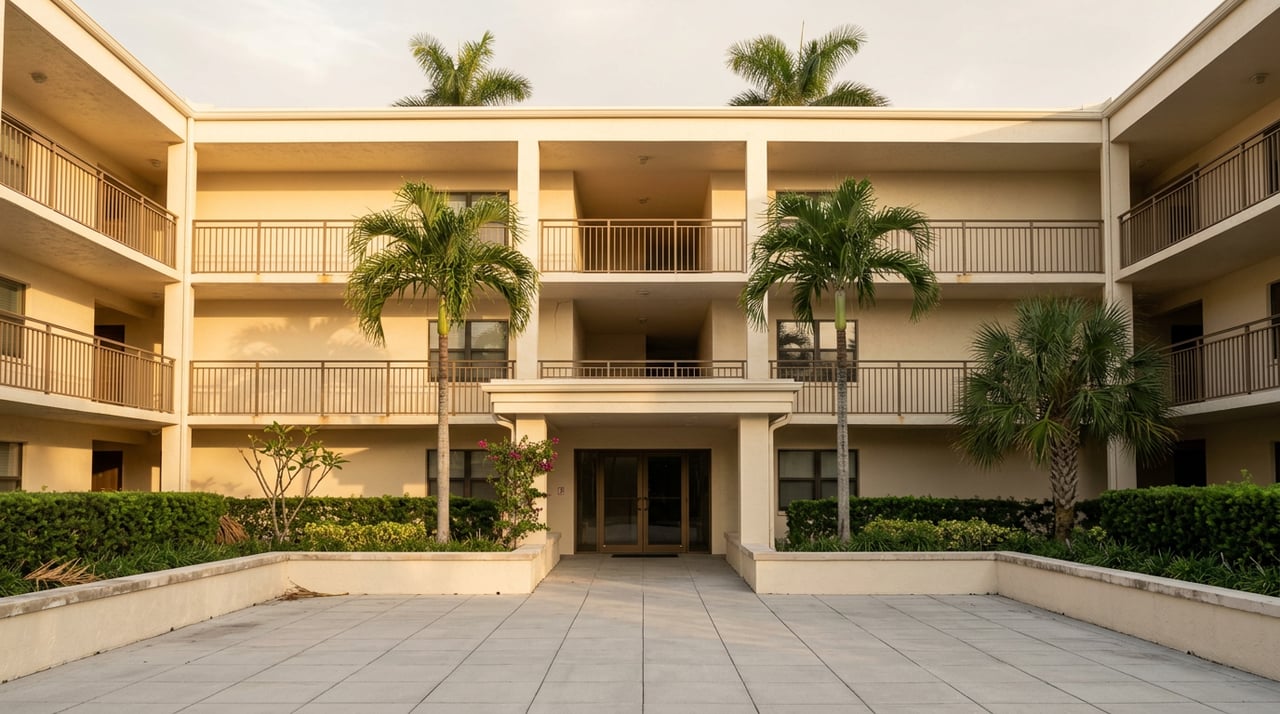
The milestone inspection law applies to buildings with three or more habitable stories, and Florida's building code does not count a ground-level parking garage as a habitable story. That distinction sounds technical until you're standing in front of two buildings that look identical from the street. One has three full floors of living space and falls squarely under the law. The other has two habitable floors sitting above open ground-floor parking, and depending on how the local building department interprets it, may not be subject to the milestone requirement at all.
Bradenton Beach worked through exactly this question earlier in 2026 while updating its own inspection ordinance to match state law. City commissioners had to revise their draft language after realizing it didn't distinguish habitable stories from total stories, a gap that mattered because the city has buildings like Bridgeport and Gulf View, where two habitable floors sit above ground-level parking, a layout common across Bradenton Beach, Anna Maria, and Holmes Beach. Bradenton Beach's building official ultimately confirmed that the state's milestone inspection rule turns on habitable space, not on how many stories a building appears to have from the outside.
There's a second layer to this. The original 2022 law set a stricter 25-year inspection trigger for any building within three miles of the coast. A 2023 amendment removed that automatic statewide rule and left it up to each local building official to decide whether coastal conditions justify the shorter timeline. In practice, this means a beachfront condo's actual inspection deadline depends on a decision made in that specific city's building department, not on a fixed statewide rule a buyer could assume from the property's address alone.
Both of these details point at the same thing. Two buildings that look interchangeable in listing photos can sit on entirely different legal timelines, and the only way to know which one you're looking at is to ask.
| Signal to check | What it looks like in a compliant building | What it looks like in a lagging building |
|---|---|---|
| Milestone inspection | Phase 1 completed on time, no deficiencies flagged, or flagged items already repaired | Overdue, in progress, or Phase 2 pending after deficiencies were found |
| SIRS reserve funding | Structural line items funded at or near 100 percent of the study's schedule | Underfunded, with a "catch-up" plan still being voted on |
| Board financials | Current | Requested but not produced, or produced without recent minutes |
| Financing status | Warrantable for conventional loans, reserves meet current lender standards | Flagged as non-warrantable, or in the process of losing that status |
| Monthly dues trend | Higher than a few years ago, but stable and explained by the reserve schedule | Recently spiked, or expected to spike once a pending assessment is approved |
What changed a few weeks ago
The lending side of this just got stricter, in more than one way at once. On March 18, 2026, Fannie Mae issued Lender Letter LL-2026-03, updating how it reviews condo projects. Two of those updates took effect for loan applications dated August 3, 2026, a few weeks before this was written.
First, Fannie Mae retired the streamlined Limited Review process for any condo project with more than ten units. Nearly every established building in the Bradenton area now goes through a Full Review that examines the association's budget, reserve funding, insurance coverage, delinquency rate, litigation history, and special assessments before a buyer's loan can close, not a lighter check. Second, when a lender relies on a reserve study rather than the association's own budget to justify financing, that study can no longer use baseline funding, the method that let an association keep its reserve balance hovering near zero as long as it never technically went negative. The study now has to show funding at its highest recommended level.
Buildings that were already funding reserves properly and keeping clean books will barely notice either change. Buildings that were leaning on a lighter review or a thin reserve study to get buyers financed now have a harder deadline arriving through their lender, not just through the state, and it's already in effect. That's likely to widen the split this piece has been describing, not narrow it.
The documents worth asking for before you offer
None of this requires a specialist. It requires asking for the right paperwork before a contract is signed, not after.
- The milestone inspection report, if the building has reached its trigger age, including whether it was Phase 1 only or moved to Phase 2
- The current Structural Integrity Reserve Study and the funded percentage for each structural component it covers
- The last twelve months of board meeting minutes, which usually mention a pending assessment well before it's formally voted on
- The condo questionnaire and estoppel certificate
- Confirmation from a lender that the building currently meets conventional financing standards, not just that it did a year ago
A building that produces all five without hesitation is telling you something. A building that stalls on any of them is telling you something too.
A short FAQ
Does any of this apply to single-family homes? No. The milestone inspection and SIRS requirements apply to condominium and cooperative buildings under Florida Statute Chapter 718 and 719. Single-family homes and most homeowner association communities fall under a different chapter and don't carry this specific reserve mandate, though any HOA can still choose to run its own reserve study.
What if the building is brand new? The SIRS requirement is triggered by a building's height, not its age. A condo building finished this year still needs a SIRS on file if it has three or more habitable stories.
Is a higher HOA fee automatically a red flag? Not on its own. A fee that's higher because reserves are fully funded on schedule is a sign of a building in good order. The distinction worth chasing down is whether the fee reflects a funded plan or a scramble to catch up after years of underfunding.
If you're weighing a condo in downtown Bradenton, along the barrier islands, or anywhere in between, the documents above will tell you more than any listing description can. The 941 Team spends time in these buildings' board minutes and reserve studies before a client ever writes an offer, because the real cost of a Bradenton-area condo isn't the number on the listing. It's the number the association hasn't billed yet. Contact us when you're ready to look past the median and into the specific building you're actually buying.
This article is general information, not legal, tax or financial advice. Consult a qualified professional about your situation.